Silica Gel Properties
Silica gel is a form of silicon dioxide (SiO₂)—the same natural compound found in sand. The key difference between silica gel and ordinary sand lies in its structure. While sand is non-porous and non-absorbent, silica gel is highly porous, allowing it to absorb large amounts of moisture.
Silica gel is:
- Odorless
- Tasteless
- Non-toxic
- Non-flammable
- Chemically stable
Because of its extremely porous structure and large surface area (approximately 800 m² per gram), silica gel can readily adsorb moisture and gases. This makes it an excellent desiccant (drying agent) used in many industries to control humidity and prevent moisture-related damage.
Silica gel is commonly used to:
- Preserve dried flowers and food products
- Protect leather goods
- Prevent moisture damage to electronics and equipment
- Control humidity in enclosed environments
When silica gel becomes saturated with moisture, it can often be reused after the moisture is evaporated, making it both efficient and practical.
Silica gel can reduce humidity levels in a closed environment to approximately 40%, helping prevent mold, corrosion, and deterioration of stored materials.
Silica Gel as Cat Litter
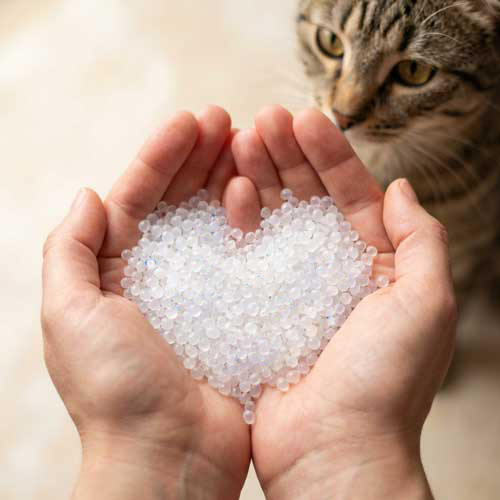
Among its many useful applications, silica gel is also widely used as cat litter. Because it is an extremely powerful desiccant, silica gel can absorb significantly more liquid than traditional clay-based litters.
Silica gel litter offers several key advantages:
- Exceptional moisture absorption
- Superior odor control
- Low tracking
- Lightweight compared to clay litter
Many cat litter brands combine small amounts of silica gel crystals with clay litter and market it as a “crystal blend.” However, 100% silica gel crystal litter provides the highest level of absorption and odor control, helping eliminate urine odors more effectively and maintain a cleaner litter box environment.